


Plastic Thermal Degradation: How Heat Transforms Polymers from Melting to Damage
Heat is essential to plastic processing. It allows polymers to soften, flow and take a new shape. But when temperature, residence time or other processing conditions become excessive, heat can also cause chemical changes that affect the polymer’s properties.
Understanding the difference between softening, melting and thermal degradation helps explain how plastics are processed, recycled and transformed into consistent, high-quality products.
Plastic Thermal Degradation
What Happens to Plastic When It Is Heated
Plastic does not simply go from “solid” to “liquid.” Its behavior changes progressively as temperature increases.
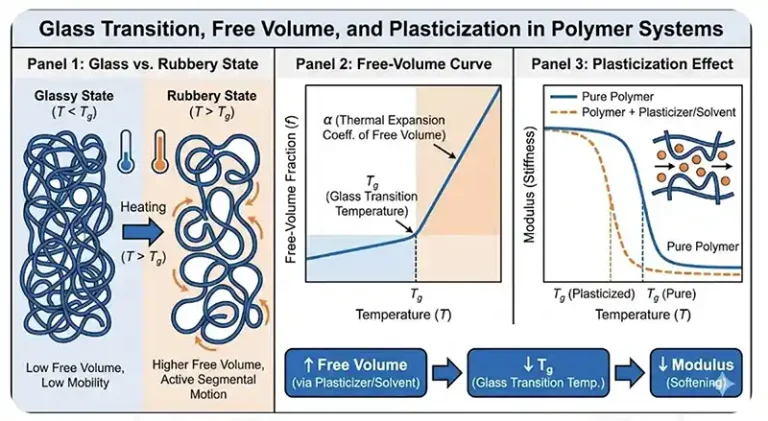
At lower temperatures, polymer chains have limited mobility and the material remains relatively rigid. As temperature rises, molecular movement increases, allowing the polymer to become softer and more flexible.
Plastic Thermal Degradation
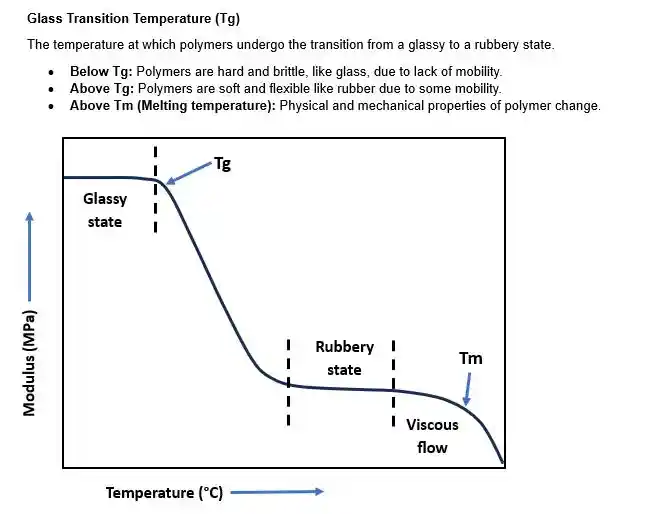
One important transition is the glass transition temperature (Tg). Above Tg, the amorphous regions of a polymer become significantly more mobile, which can change the material’s stiffness and flexibility.
For semi-crystalline plastics, another important transition is the melting temperature (Tm). At this point, the ordered crystalline regions lose their structure and the polymer can flow, making it possible to mold or reshape the material.
From Softening to Melting: The Processing Window
This temperature-dependent behavior is what makes thermoplastics so useful in manufacturing.
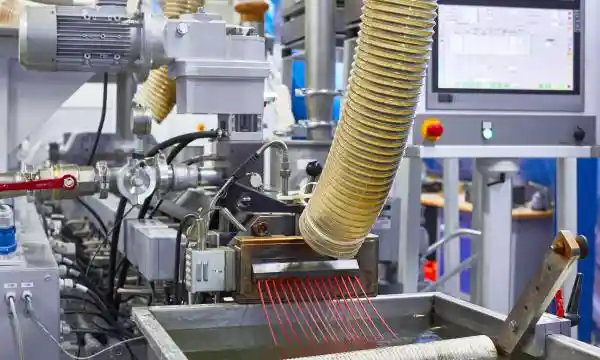
Materials such as PE, PP and PET can be heated, shaped and cooled and, under controlled conditions, processed again. However, each polymer has its own thermal characteristics and processing requirements.
As general reference points, HDPE typically melts around 125–135°C, while PP commonly melts around 160–170°C. LDPE generally melts around 105–115°C, while PET melts at a substantially higher temperature, typically around 250–260°C, depending on the material grade and structure.
These values should not be considered universal processing settings. Actual temperatures depend on the specific resin, equipment, product design and production conditions.
This is why there is no single “plastic temperature.” Each polymer has its own processing window in which it can flow properly while maintaining material stability.
Plastic Thermal Degradation
When Does Heat Become a Problem?
The important question is what happens when thermal exposure becomes too severe.
Plastic thermal degradation occurs when heat and processing conditions cause chemical changes within the polymer. Depending on the material and environment, polymer chains can undergo chain scission, oxidation, hydrolysis or other reactions that change molecular structure and affect performance.
The effects can include:
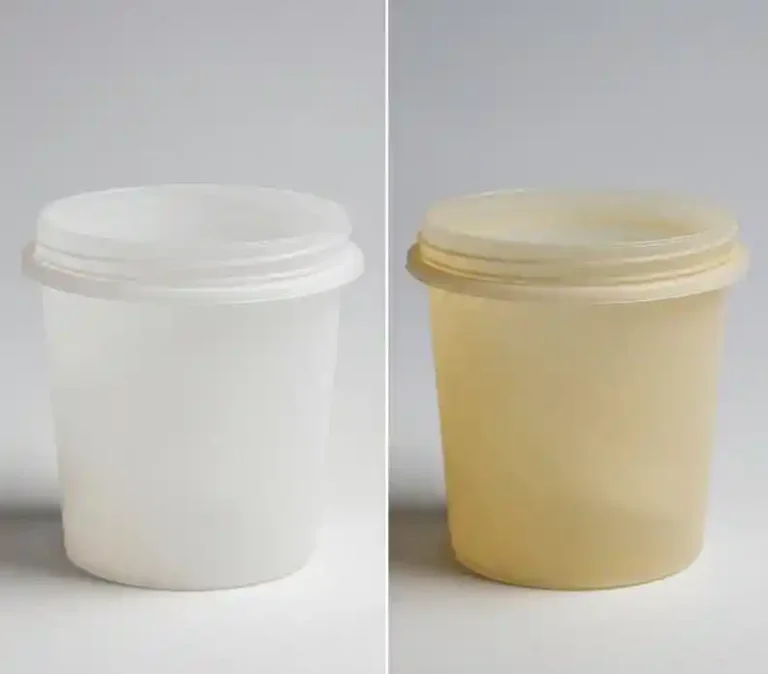
- Discoloration or yellowing
- Loss of mechanical strength
- Changes in flexibility or stiffness
- Brittleness or cracking
- Changes in melt flow
- Loss of transparency
- Formation of degradation byproducts
Melting and degradation, however, are not the same thing.
Melting is primarily a physical transition that allows a thermoplastic to flow. When the material cools, it can solidify again.
Degradation is a chemical change to the polymer. It can be irreversible and may reduce molecular weight or alter the material’s mechanical, visual and processing properties.
Why Processing Conditions Matter
Temperature is only one part of the equation.
A polymer exposed to a high temperature for a short period may behave differently from the same material held at that temperature for a much longer time. Oxygen exposure, moisture, shear, additives, contamination and previous thermal history can also influence degradation.
This is particularly important in continuous processing equipment, where the polymer remains inside heated zones for a specific residence time.
Manufacturers therefore control more than just temperature. Temperature profiles, residence time, screw speed, shear and material preparation all contribute to stable processing.
PET is a good example. In addition to thermal and oxidative effects, moisture can contribute to hydrolysis, which can reduce molecular weight during processing. Proper drying is therefore an important part of maintaining PET performance.
Thermal Degradation and Plastic Recycling
Repeated processing makes thermal history especially important in mechanical recycling.
Each recycling cycle can expose the polymer to additional heat, oxygen and mechanical stress. Depending on the material and processing conditions, this can gradually change molecular weight and other properties.
This does not mean recycled plastic automatically becomes unusable. Instead, its condition must be understood and controlled.
Recycling operations may use stabilizers, controlled processing conditions, drying and blending with virgin resin, when appropriate, to help maintain the required material performance.
The effect of repeated processing also varies by polymer, which is why recycling processes must be designed around the specific material being recovered.
Plastic Thermal Degradation
Why Thermal Control Matters in Plastic Manufacturing
The relationship between temperature, melting and degradation is fundamental to plastic processing.
Manufacturers need enough heat to reduce viscosity and allow the polymer to flow, but excessive temperature or residence time can negatively affect material performance.
This balance applies across many manufacturing processes, including extrusion, injection molding, blow molding, film converting and plastic recycling. Each process requires its own temperature profile and operating conditions.
The objective is not simply to use more heat. It is to provide the right thermal conditions for the specific polymer and application.
Conclusion
Heat gives thermoplastics their ability to flow and be shaped, but it also has limits.
Understanding the difference between softening, melting and degradation helps manufacturers control processing conditions and protect material performance.
As plastic processing and recycling technologies continue to evolve, managing the thermal processing window will remain essential for consistent production and high-quality products.
Plastic thermal degradation is therefore not only a chemistry concept. It is directly connected to the operating conditions of extruders, injection molding machines, blow molding equipment and recycling systems.
Choosing Equipment for Controlled Thermal Processing
Understanding plastic thermal degradation is one thing. Designing a production line that maintains consistent processing conditions is another.
Whether your operation involves extrusion, injection molding, blow molding, film converting or plastic recycling, equipment configuration plays an important role in achieving stable production.
If you are evaluating equipment or planning a new plastic manufacturing line, AMK Plastics coordinates machinery projects across the Caribbean and Latin America, helping match machine configuration to your polymer, production requirements and processing conditions.
Frequently Asked Questions
1. What is plastic thermal degradation?
Plastic thermal degradation is a chemical process in which heat and associated processing conditions alter the molecular structure of a polymer. Depending on the material, this can involve chain scission, oxidation, hydrolysis or other chemical reactions.
These changes can affect molecular weight, mechanical strength, appearance, melt flow and processability.
2. What's the difference between melting and thermal degradation?
Melting is primarily a physical transition that allows a thermoplastic to flow. When the material cools, it can solidify again.
Thermal degradation is a chemical change that alters the polymer’s molecular structure and can permanently affect its properties.
3. At what temperature does thermal degradation start?
There is no single degradation temperature for all plastics.
The onset and rate of degradation depend on the polymer, temperature, residence time, oxygen exposure, moisture, additives and previous processing history.
For this reason, manufacturers work within a controlled processing window rather than relying on one universal temperature limit.
4. What are the signs of thermal degradation?
Common signs include discoloration, yellowing, loss of transparency, brittleness, cracking, changes in flexibility and unusual odors from degradation byproducts.
Changes in melt flow behavior can also indicate that the polymer has been affected.
5. How does recycling affect thermal degradation?
Repeated recycling cycles add thermal and mechanical history to the polymer. Depending on the material and processing conditions, repeated exposure can alter molecular weight and material properties.
Controlled temperatures, proper drying, stabilizers and blending strategies can help maintain the desired performance of recycled resin.
References
- Colin, X., & Verdu, J. (2006). Polymer degradation during processing. Comptes Rendus Chimie, 9(11–12), 1380–1395. https://doi.org/10.1016/j.crci.2006.06.004
- Dintcheva, N. T. (2024). Overview of polymers and biopolymers degradation and stabilization towards sustainability and materials circularity. Polymer, 306, 127136.
- Hiemenz, P. C., & Lodge, T. P. (2013). Review of polymer oxidation and its relationship with materials performance and lifetime prediction. Polymer Degradation and Stability, 98(12), 2419–2429.
- Clark, R. A., & Shaver, M. P. (2024). Depolymerization within a Circular Plastics System. Chemical Reviews, 124(5), 2617–2650.
📞 Call: (305) 470-9088 /💬 WhatsApp: (786) 571-2543
blow molding machines for business, blow molding investment, blow molding advantages, plastics industry growth, plastics manufacturing profitability, blow molding machine distributor, plastics machinery supplier