


Two plastic products can look almost identical but behave very differently. One may be rigid and strong, while another can bend easily without breaking.
Plastic properties help explain why.
The answer has to do with the type of polymer used, how its molecules are arranged, and how the material is processed.
Understanding these differences helps explain why different plastic materials are selected for bottles, containers, packaging, automotive parts and many other products.
It Starts with the Polymer
Plastic is made from polymers, which are long molecules made of repeating building blocks.
You can think of a polymer as a very long chain. The way these chains are built and how they interact with each other affects the properties of the final plastic.
For example, HDPE (High Density Polyethylene) is generally more rigid and stronger than LDPE (Low Density Polyethylene). HDPE has a more linear molecular structure, which allows its chains to pack more closely. LDPE has more branching, giving it greater flexibility.
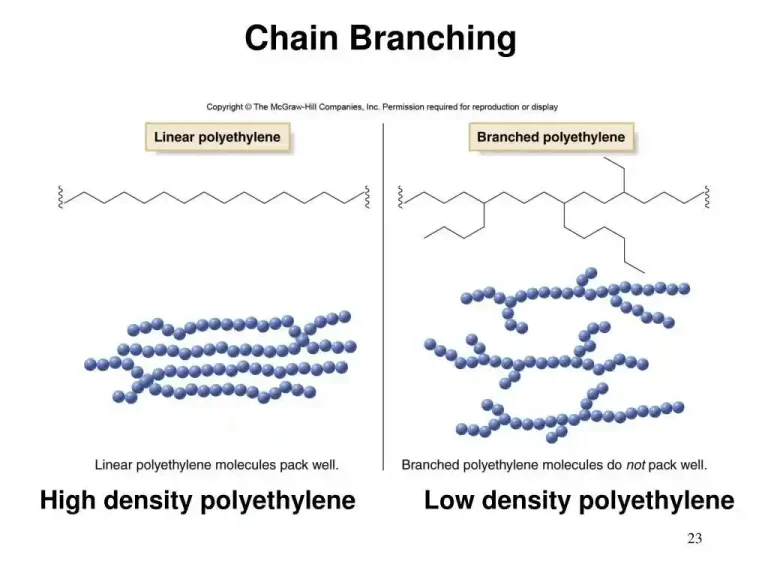
This is one reason why two plastics made from the same basic chemical family can still behave differently.
Why Are Some Plastics Flexible?
One important factor is how easily the polymer chains can move.
When the chains can move more freely, the plastic can be softer and more flexible. When their movement is more restricted, the material tends to be more rigid.
The way the chains are organized also matters. Some plastics have areas where the polymer chains are more organized, which can increase stiffness and strength. These areas are known as crystalline regions.
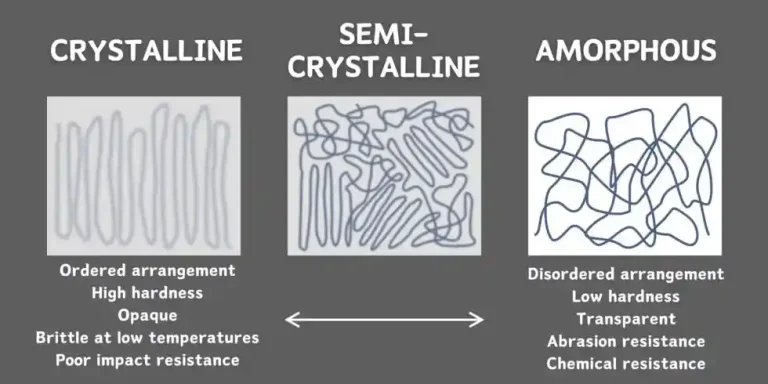
You don’t need to think of them as tiny pieces of glass. They are simply areas where the polymer chains are arranged in a more organized way.
Temperature Also Matters
Have you ever noticed that some plastics feel different when exposed to heat?
Temperature can change how a plastic behaves.
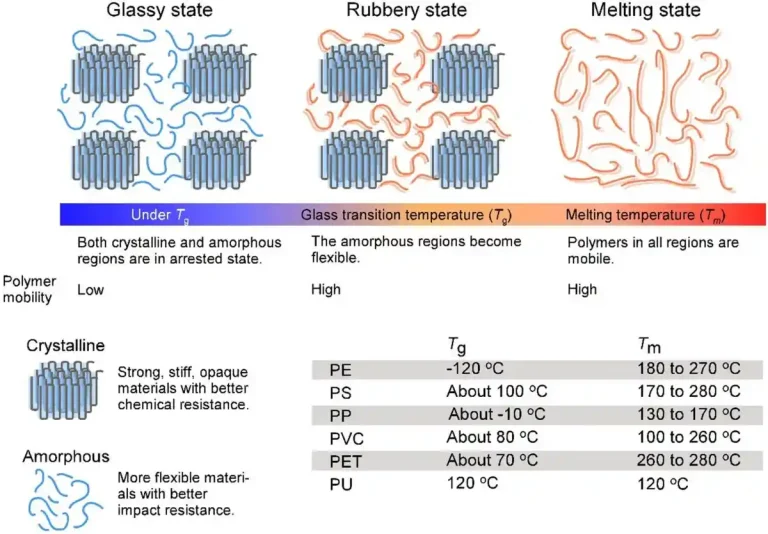
As temperature increases, polymer chains generally become more mobile. This can make some plastics softer and less rigid.
This is particularly important during plastic manufacturing, because materials need to be heated and cooled under controlled conditions to achieve the desired properties.
Too little heat may prevent the material from being processed correctly, while excessive heat or prolonged exposure can damage the polymer.
Processing Can Change Plastic Properties
The material itself is only part of the equation.
What happens during manufacturing can also affect the final properties of a plastic product.
Processes such as stretching, cooling and molding can influence how polymer chains are arranged. This is especially important in processes such as PET stretch blow molding, where stretching the material can affect its molecular orientation and crystallinity.
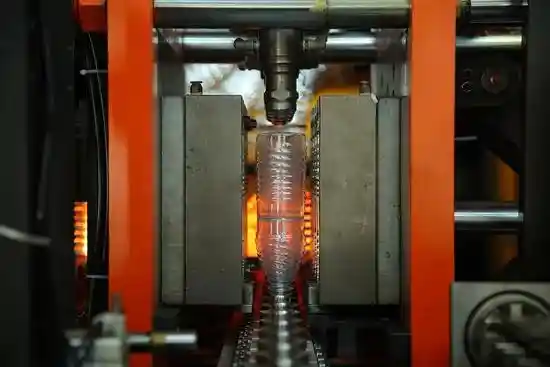
This means that producing a high-quality plastic product isn’t only about choosing the right resin. The way the material is processed also matters.
Additives Can Make a Difference
Manufacturers can also use additives to modify the properties of plastic materials.
Depending on the formulation, additives can help improve:
- Flexibility
- Impact resistance
- UV resistance
- Color
- Processing performance
This means that two products made from the same basic polymer can still have different characteristics.
Why Does This Matter?
Understanding plastic properties helps manufacturers select the right material for each application.
A bottle needs enough stiffness to maintain its shape. A flexible package needs to bend without cracking. An industrial container may require high impact resistance.
The goal is therefore not simply to find the “strongest” plastic.
The goal is to choose the plastic with the right properties for the job.
Conclusion
Why are some plastics stronger, softer or more flexible than others?
It comes down to several factors, including polymer structure, molecular organization, temperature, additives and processing conditions.
What we see in a finished plastic product often begins at the molecular level. Understanding that connection helps explain why different plastics perform differently and why material selection and processing are so important in modern plastic manufacturing.
Frequently Asked Questions About Plastic Properties
1. Why are some plastics more flexible than others?
The flexibility of a plastic depends largely on how easily its polymer chains can move. Materials with more branching, lower crystallinity, or weaker molecular interactions tend to allow greater chain movement, resulting in softer and more flexible plastics. Materials with more linear chains, higher crystallinity, or stronger molecular interactions tend to be more rigid. Polymer chemistry sets the baseline, while processing conditions and additives can further influence these properties.
2. What is the difference between HDPE and LDPE?
HDPE (High Density Polyethylene) has a more linear molecular structure that allows its chains to pack closely together, resulting in a rigid and strong material commonly used for bottles and containers. LDPE (Low Density Polyethylene) has more chain branching, which prevents close packing and results in a softer, more flexible material commonly used for films and stretch wrapping. Both are types of polyethylene, but their molecular structure gives them very different properties and applications.
3. What is crystallinity in plastics?
Crystallinity refers to regions within a polymer where the chains are arranged in an ordered structure. Plastics with higher crystallinity tend to be stronger, denser, and more rigid, while often being less transparent. Plastics with lower crystallinity or a more amorphous structure tend to be more flexible and can offer greater clarity. Cooling rate and other processing conditions influence how much crystalline structure develops in the final product.
4. How does temperature affect plastic behavior?
Temperature changes polymer chain mobility. As temperature rises, the chains become more mobile, making the material softer and easier to process. This is why plastic manufacturing requires controlled heating and cooling. Too little heat can prevent the material from flowing properly, while excessive heat or prolonged exposure can cause polymer degradation. Each polymer has a specific processing window in which it can be processed effectively.
5. Do additives really change plastic properties?
Yes. Additives can modify flexibility, impact resistance, UV resistance, color, thermal stability, and processing performance. This is why two products made from the same base polymer can behave very differently in real-world applications. The formulation of a plastic can be just as important as the choice of polymer itself.
References
- Brydson’s Plastics Materials, 8th Edition — “Relation of Structure to Thermal and Mechanical Properties.” Elsevier, 2017. ScienceDirect
- “Synthesis and Deconstruction of Polyethylene-type Materials.” Chemical Reviews, American Chemical Society. This review discusses the relationship between polyethylene molecular structure, crystallinity and mechanical properties. American Chemical Society
- “Biaxial stretch-induced crystallization of poly(ethylene terephthalate) above glass transition temperature.” Polymer, 2016. ScienceDirect
- “Strain induced crystallization of PET under biaxial conditions. From laboratory tests to injection stretch-blow molding.” Polymer, 2023. ScienceDirect