


SLITTING MACHINES
- Home
- SLITTING MACHINES
About Us
- Home  
- About Us
Slitting Machines
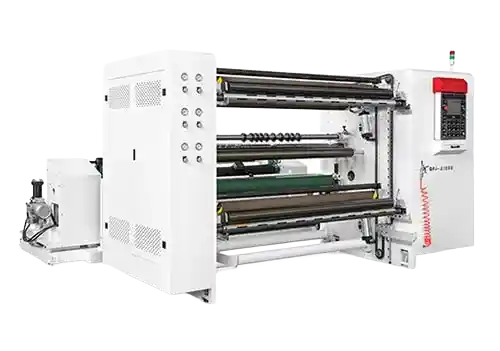
Slitting machines are used to convert wide rolls of film into narrower rolls with precise width and clean edges. These machines play a key role in packaging, printing, and converting operations where accuracy, speed, and consistency are essential.
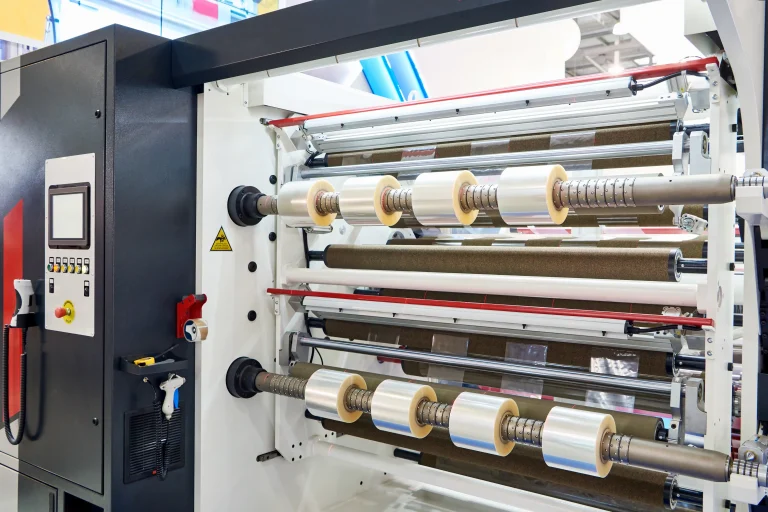
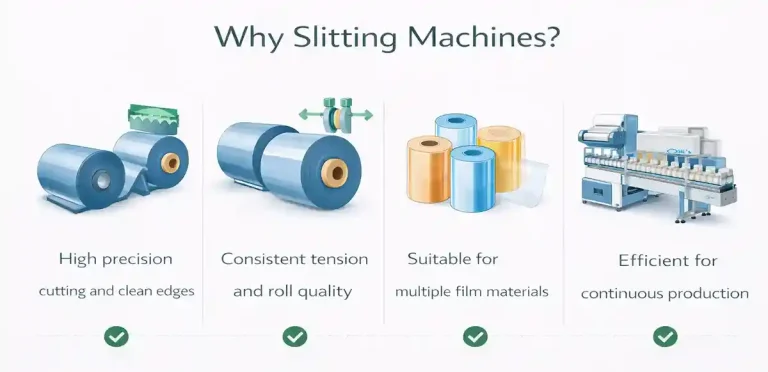
Designed for continuous operation, these systems ensure stable tension control and uniform rewinding, making them ideal for high-volume production environments.
Our Slitting Machine Solutions
Key Features:
High-Speed Slitting Machines
Built for fast and efficient processing of large film rolls.
Ideal for high-output operations requiring both precision and consistency.
Film Slitting & Rewinding Machines
Designed to slit and rewind materials into specific widths.
Ensures smooth roll formation and accurate alignment.
Multi-Material Slitting Machines
Compatible with a wide range of flexible materials such as BOPP, PET, PE, and laminated films.
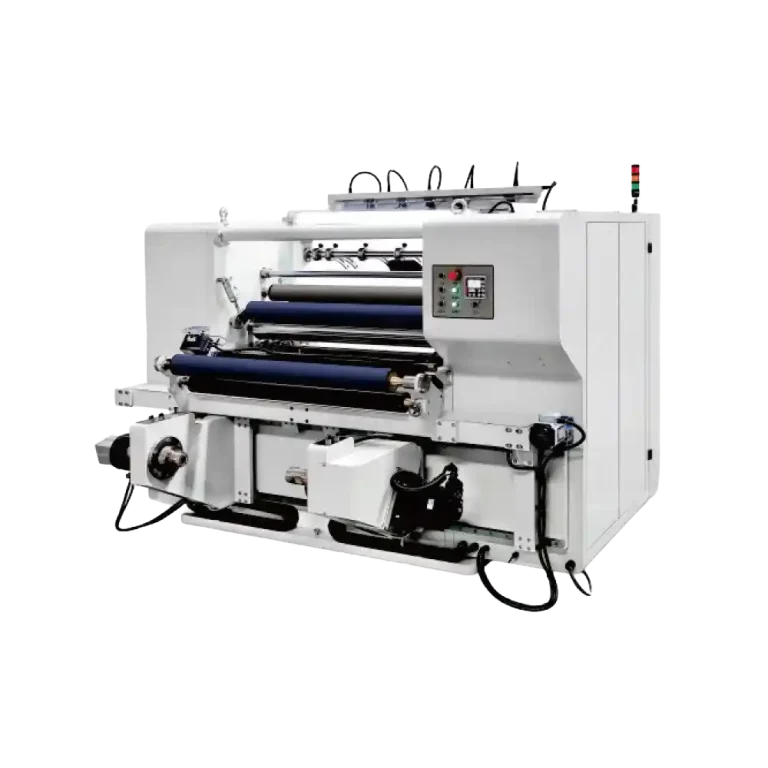
Our slitting machines are essential for converting large film rolls into usable formats with precision and efficiency. Their flexibility and reliability make them a key part of modern packaging and converting lines.
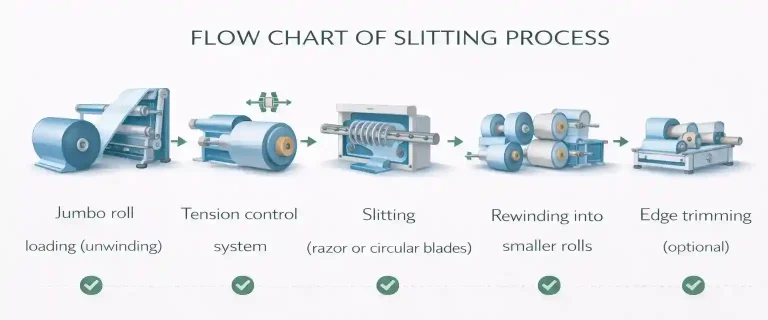
Slitting In The Converting Sequence
Master rolls arriving at the slitter typically come from blown film extrusion lines. Once slit to target width, the narrower rolls move to flexo printing machines for branded packaging or directly to bag making machines for conversion into finished bags. Edge trim and rejected material can be reprocessed through recycling machines and returned to production as reclaimed resin.
Request a Quote for Slitting Machines
1. What is a slitting machine used for?
These machines convert wide master rolls of film, foil, paper or laminate into narrower rolls with precise widths and clean edges. Widely used in packaging, printing, converting and label manufacturing operations, they are the essential step between master roll production and downstream processes such as bag making, label printing, lamination and flexible packaging conversion.
2. What’s the difference between high-speed, film slitting-rewinding, and multi-material slitting machines?
A High-speed slitting machine is built for fast processing of large film rolls in high-output operations where throughput drives productivity. Film slitting and rewinding machines combine the cutting stage with controlled rewinding, ensuring smooth roll formation and accurate alignment on the finished narrower rolls. A multi-material slitting machine handles a wider range of flexible substrates — BOPP, PET, PE and laminated films — making them the correct choice for converters running varied material types on a single machine.
3. What materials can be processed with a slitting machine?
Standard slitting machines process flexible substrates including BOPP (biaxially oriented polypropylene), PET (polyethylene terephthalate), PE (polyethylene), laminated multi-layer films, printed films and specialty coated materials. Material selection determines cutting method (rotary shear, razor blade or crush cut), tension control settings and rewinding parameters — each adjusted based on film thickness, surface treatment and target roll specifications.
4. Why is tension control important in slitting operations?
Stable tension control determines whether the finished narrower rolls have uniform diameter, aligned edges and no telescoping during unwinding downstream. Uneven tension across the slitting cycle causes edge waviness, roll formation defects and material waste — problems that show up in downstream processes such as bag making, printing or lamination as jamming, misalignment and rejected finished product. Continuous operation slitting machines maintain tension control through servo-driven unwind and rewind stations.
5. Does AMK provide installation and technical support for slitting machines?
Yes. From our Miami office, AMK provides specification guidance, installation coordination and ongoing technical support for these machine projects across the United States, the Caribbean and Latin America. Equipment ships directly from the manufacturing partner to your facility.